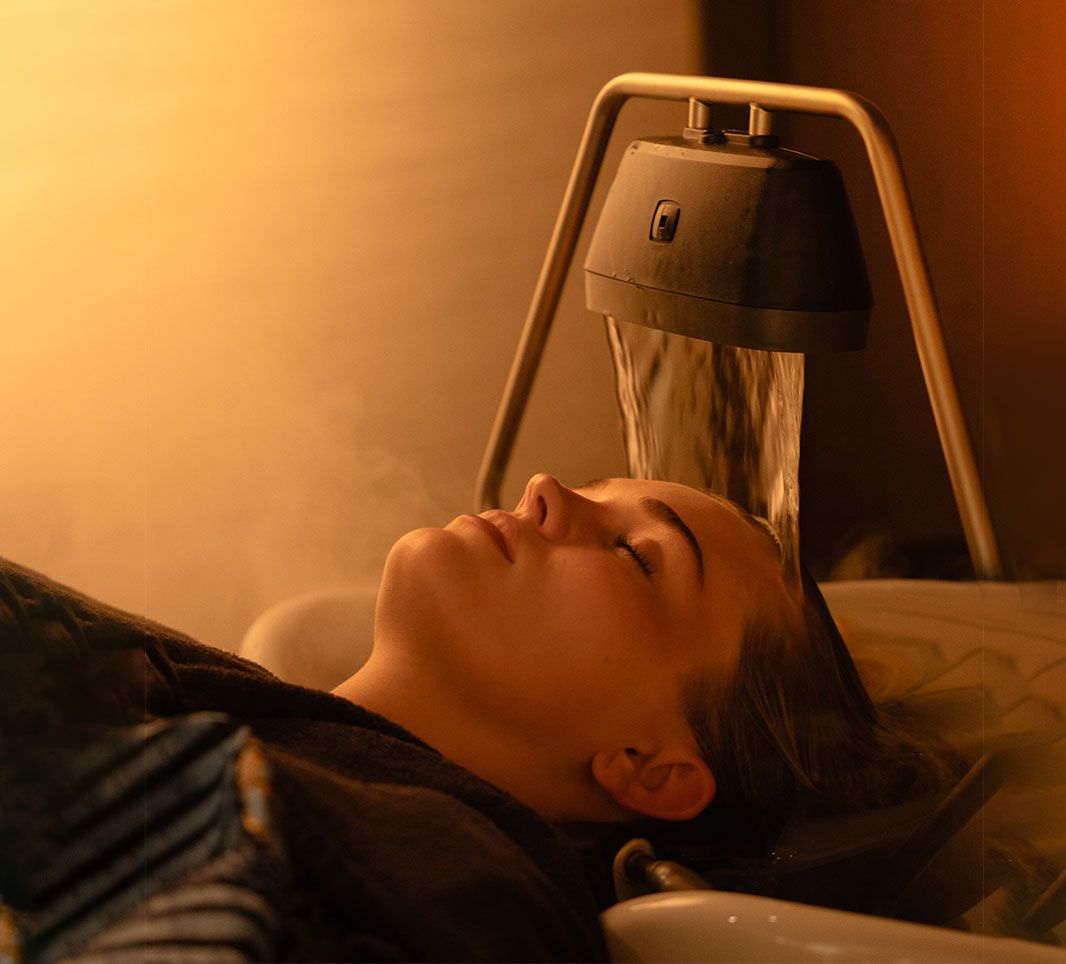
How to make your Japanese head spa results last longer
A Japanese head spa can leave you walking out with a scalp that feels lighter, calmer, and more balanced, and hair that feels softer, cleaner, and easier to manage.
But the treatment itself is only part of the story.
What you do between visits plays a big part in how long the benefits of a Japanese head spa last.
The way you wash your hair, the products you reach for, how often you use heat, what your scalp is exposed to during the week, and even factors like stress, hydration, and sleep can all affect how quickly that fresh post-treatment feeling fades.
At Tokyo Headspa, our treatments are designed to do more than create a moment of relaxation. They support scalp health, hair condition, and overall wellbeing through Japanese-inspired ritual, targeted care, and products selected with intention. Our treatments include options focused on detoxifying the scalp, deeply restoring hair and scalp condition, and supporting hair growth, while our BEETS range is built around ongoing scalp and hair care between visits.
So if you want to get the most from your appointment, it helps to know what's happening after your treatment, what to avoid in the first day or two, and how to create a simple maintenance routine that supports the work already done in the treatment room.
What happens to my scalp and hair after a Japanese head spa?
After a Japanese head spa, your scalp and hair have usually just been through a very intentional reset.
At Tokyo Headspa, that can include deep cleansing, massage, Japanese mist scalp therapy, conditioning support, and treatment-specific scalp and hair care depending on the service you book.
Our treatments are designed to lift build-up, restore hydration, improve scalp and hair care, and bring the scalp back toward balance. That's why many guests notice that their roots feel fresher and lighter, their scalp feels calmer, and their hair feels softer, shinier, and easier to manage afterwards.
The treatment can also leave your head, neck, and shoulders feeling more relaxed, which is one reason Japanese head spas tend to feel different from a simple wash or scalp massage - it works on the scalp and hair, but it also creates a more complete sense of physical and mental release.
That refreshed feeling is exactly why aftercare matters.
Your scalp and hair are in a better state than they were before treatment, so the goal is to support that state for as long as possible rather than rushing back into habits that recreate congestion, dryness, or stress.
What should I do in the first 24 to 48 hours after a Japanese head spa?
The first 24 to 48 hours are the most important time to protect the work your treatment has just done.
Your scalp has been deeply cleansed and stimulated. Your hair has likely been conditioned and replenished. If you've had a treatment like Himiko or a Tokyo Headspa experience with head bath, that may have included layers of scalp care, conditioning, and mist-supported hydration.
This isn't the time to immediately coat the scalp in dry shampoo, thick styling products, heavy oils, or texturising powders unless you genuinely need them.
Those products can quickly create a layer over a scalp that has just been carefully cleared and balanced. It's also wise to go easy on excessive heat styling straight after your appointment and avoid very tight hairstyles that create tension at the roots.
A practical way to think about it is this: for the first day or two, try to keep everything lighter, gentler, and less complicated than usual.
That means:
avoiding unnecessary styling product build-up.
skipping harsh scalp scrubs or strong clarifying products at home.
keeping heat styling to a minimum.
avoiding hairstyles that pull tightly on the scalp.
letting your scalp settle instead of constantly touching or reworking your hair.
The aim is to give your scalp and hair a chance to stay in that just-treated state for longer.
When should I wash my hair after a head spa?
In most cases, it makes sense to wait until the next day to wash your hair, rather than washing it again straight away.
That gives the scalp and hair a little time to settle after treatment and lets you enjoy the full feeling of freshness, softness, and lightness that comes from the service. It also helps avoid undoing that clean, balanced feeling too quickly.
After that, your washing schedule should be guided by your scalp and hair type, not by a rigid universal rule.
If your scalp is on the oilier side or your hair is fine, you may still need to wash more often than someone with drier hair, thicker hair, or more textured hair.
If your scalp starts to feel oily, itchy, flat, or congested again, that's usually your cue.
The goal is not to delay washing for the sake of it. The goal is to wash gently and at the right time.
When you do wash:
use lukewarm rather than very hot water.
massage shampoo into the scalp with your fingertips, not your nails.
avoid scrubbing the lengths roughly.
follow with conditioner suited to your hair type.
dry your hair gently instead of rubbing it hard with a towel.
A good post-head spa wash should leave your scalp feeling clean and your hair feeling cared for, not stripped.
What products should I use after a Japanese head spa?
The best products after a Japanese head spa are the ones that support the condition your treatment has just created.
That usually means products that help keep the scalp balanced, the hair hydrated, and the overall routine gentle and consistent rather than heavy, reactive, or overloaded.
Tokyo Headspa's BEETS range is designed around repair, protection, scalp support, and long-term hair and scalp health, with products including scalp serum, shampoo, treatment, and scalp-focused formulas.
The Bio-Lift EX Scalp Serum, for example, is used in our Sakuyahime treatment, while the BEETS shampoo and treatment steps are part of our layered approach to scalp and hair recovery.
Your home product routine should ideally do three things:
cleanse without being harsh.
support the scalp rather than coating it.
restore moisture and strength through the lengths.
A practical approach to choosing products to use after your Tokyo Head Spa could look like this:
a gentle shampoo that suits your scalp condition.
a conditioner or treatment that supports softness and strength.
a scalp serum or scalp treatment if hair growth or scalp health is one of your goals.
styling products used lightly and only as needed.
What should I avoid if I want my head spa results to last longer?
The habits that shorten results fastest are usually the ones that put stress, build-up, dryness, or tension back onto the scalp and hair.
That includes:
using too much dry shampoo too soon
layering on heavy styling products
very frequent high-heat styling
washing with very hot water
tight hairstyles that pull at the roots
ignoring sweat, salt, chlorine, or pollution build-up for too long
bouncing between lots of strong products instead of following a simple, consistent routine
Environmental exposure matters too. UV exposure, saltwater, chlorine, heat, and city dust can all affect the scalp and hair by drying the hair out, roughening the cuticle, and contributing to imbalance and build-up.
That doesn't mean you need to avoid the beach, exercise, or normal life. It just means those things should be followed by sensible aftercare. If your scalp feels coated, tight, irritated, or heavy after a week of sun, sweat, dry shampoo, and styling product, that's useful information. It means your scalp may already be moving away from the balanced state created by your head spa.
What daily routine should I follow between Japanese head spa visits?
The best daily routine is the one you'll actually stick to.
It doesn't need to be complicated, but it should be intentional.
In the morning, take a quick mental check of your scalp and hair. Do your roots still feel fresh, or are they already starting to feel flat or oily? Does your scalp feel calm, or slightly tight or itchy? Is your hair behaving well, or does it already feel dry or harder to style than it did just after your treatment?
From there, keep things simple:
brush or comb gently.
use only the styling product you actually need.
keep heat settings lower where possible.
avoid pulling your hair back tightly every day if your scalp is feeling tense.
In the evening, pay attention to what your hair and scalp have been exposed to.
Sweat, smoke, city grime, saltwater, sunscreen around the hairline, and repeated product use can all add up. If your scalp feels coated or unsettled, don't just keep piling new product on top of the old. Cleanse when it needs cleansing and use any scalp-supportive product consistently rather than randomly.
This kind of easy daily maintenance is often what keeps that head spa feeling going longest.
What weekly routine helps maintain scalp and hair health between visits?
A weekly routine is where longer-term results are often won or lost.
Once or twice a week, it helps to step back and see how your scalp and hair are feeling.
Ask yourself:
Is my scalp staying fresh for a reasonable amount of time after washing?
Are flakes, itchiness, or oil starting to return?
Are my roots feeling heavier faster than they used to?
Are my lengths becoming dry, rough, or tangled again?
Am I using products that help or products that just sit on top of everything?
A weekly reset might include:
a more mindful wash and conditioning session.
consistent use of your scalp-supportive product.
trimming back unnecessary product use.
giving your hair a break from high heat.
noticing patterns in how your scalp behaves after stressful or busy weeks.
This is also where Tokyo Headspa's Journeys make sense as part of a bigger maintenance plan. Journeys are a way to achieve the best results and support your long-term wellbeing goals.
What lifestyle factors can affect my scalp and hair between appointments?
Scalp and hair health don't exist in a bubble.
Hydration, nutrition, sleep, stress, hormones, environment, and general health can all influence how your scalp feels and how your hair behaves between appointments.
That's one reason some people feel like their hair and scalp suddenly become harder to manage during stressful periods, seasonal changes, or times when they're sleeping badly or running themselves into the ground.
A few practical things that help:
staying well hydrated.
eating enough protein and nutrient-rich foods.
keeping stress in check where possible.
protecting hair and scalp from repeated environmental stress.
noticing patterns rather than waiting until things feel extreme.
This doesn't mean every scalp issue is something you can fix with water and sleep alone. It just means that a good treatment and good products tend to work best when your wider routine supports them.
How do I know it's time to book my next Tokyo Headspa treatment?
Most people leave it a bit too long.
They wait until their scalp feels uncomfortable, their roots feel heavy, or their hair stops behaving, when regular maintenance usually works better than rescue mode.
We recommend returning every 2 to 4 weeks depending on your scalp, your stress levels, and your goals. That gives you a useful framework, but your own signs matter too.
It may be time to rebook if:
your scalp feels oily, itchy, flaky, or congested again.
your roots are losing lift and feeling heavier faster.
your hair no longer feels as soft, light, or manageable.
tension is building again through your scalp, head, neck, and shoulders.
you're relying more heavily on dry shampoo or styling products to make your hair feel workable.
you're trying to support hair growth or scalp change and don't want to lose momentum.
The best time to come back is often just before things feel fully off track again.
Which Tokyo Headspa treatment should I book next?
That depends on what you want to maintain or improve.
If your main focus is scalp and hair detox and keeping things feeling clear, fresh, and balanced, Himiko is the obvious treatment. It's our signature detox treatment for improved hair and scalp care, including Japanese mist scalp therapy and an ultrasonic oscillator to detoxify the scalp.
If your focus is hair growth support, then our Hair Growth Journey is perfect as part of a longer-term plan.
If you're looking for a more immersive wellbeing experience while still supporting scalp and hair health, Orihime or Amaterasu are a broader reset experiences, offering deep relaxation and deluxe care.
Keeping the ritual going between visits
The most effective aftercare is not extreme.
It's consistent.
It's washing your hair at the right time, not automatically.
It's choosing products that support your scalp instead of overwhelming it.
It's easing off the habits that create fast build-up, dryness, and tension.
It's noticing the early signs that your scalp is moving out of balance.
And it's coming back before your treatment feels like a rescue mission.
That's really the difference between having a lovely appointment and getting lasting value from Japanese head spa care.
At Tokyo Headspa, the treatment is the beginning of that rhythm, not the end.
Find your nearest Tokyo Headspa
Bondi Junction, Sydney Head Spa
Tokyo Head spa in Surrey Hills, Sydney
Newly opened most luxurious head spa in St Leonards, Sydney
Tokyo Head spa in Teneriffe, Brisbane
Common questions
It depends on your scalp type, hair type, routine, and lifestyle. For many guests, the results last longest when they follow gentle aftercare and return regularly. We recommend a rhythm of every 2 to 4 weeks depending on your needs.
Yes. We would love to welcome you however it is not recommended to have a Japanese head spa experience if you are currently pregnant, diagnosed with, recovering from, or undergoing treatment for certain medical conditions. Find out more information here.
Gentle, scalp-supportive products are usually best. Tokyo Headspa's BEETS range is the most natural fit if you want to continue their treatment philosophy at home because the range is positioned around scalp support, repair, and long-term hair and scalp health.
You can, but it's better not to lean on it too heavily straight away. Overusing dry shampoo can quickly recreate build-up on a freshly treated scalp.
Book a rejuvenation journey
Save 10% with our Head spa Journeys, expertly created to help you achieve the best results and support your well-being goals
See Journeys